Absolute Killer Croc: Top Deadliest Reptile Facts
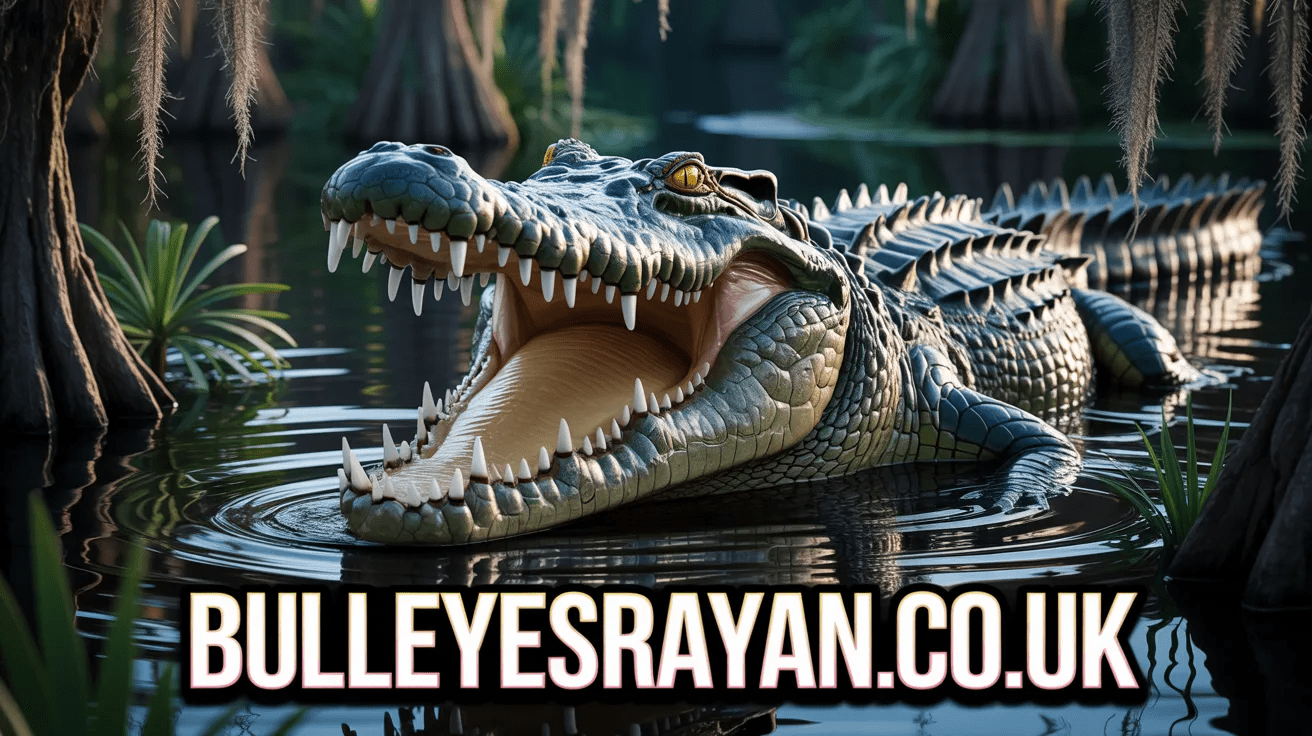
The Absolute Killer Croc Nature’s Most Perfect Predator
The water looks calm. Then two eyes break the surface. You are watching the absolute killer croc in its natural zone. This reptile has survived for 80 million years without major changes because its design works perfectly. Few animals command such fear and respect.
Below, you will learn exactly why this creature ranks above sharks and lions in attack success rate. We use recent studies and expert field notes. No fluff. No fake drama. Just powerful facts about a real apex hunter.
What Makes an Absolute Killer Croc Different from Normal Crocodiles?
Not every crocodile earns this title. A normal crocodile avoids humans and large prey. The absolute killer croc actively patrols territories with high prey density. It shows zero hesitation when attacking creatures twice its size.
These individuals often grow larger than average. They dominate river sections for decades. Field researchers from CrocBITE note that such crocs develop unique attack patterns based on local prey behavior. That means real intelligence, not just instinct.
Where Does the Absolute Killer Croc Live Today?
You find this predator across three main regions. Northern Australia leads the list. The Kimberley region and Darwin harbors record-size males. Southeast Asia comes second, especially Borneo and Sumatra. Florida now reports established populations too.
These crocodiles prefer brackish water where rivers meet the sea. They move between saltwater and freshwater easily. A single absolute killer croc often claims 20 miles of river as private hunting ground. No other crocodile enters that zone.
How Powerful Is the Bite of an Absolute Killer Croc?
The numbers shock most people. A large adult delivers 3,700 PSI of force. That equals the weight of a small pickup truck pressing down on one tooth. Compare that to a lion at 650 PSI. You get six times more crushing power.
Dr. Gregory Erickson from Florida State University measured this directly in 2012. His team used custom sensors inside steel boots. The crocodile bit without stopping. Teeth penetrated steel. No animal on earth bites harder than the absolute killer croc.
What Hunting Strategies Does This Predator Use?
Patience defines the kill. The absolute killer croc waits motionless for hours. Only eyes and nostrils stay above water. It tracks vibration through jaw sensors. Every footstep on the riverbank sends a signal.
The attack lasts two seconds. The croc explodes upward, grabs the prey by the leg or head, and drags it underwater. Then comes the death roll. The crocodile spins violently to tear flesh and drown the victim. This technique works on animals as large as adult water buffalo.
Can an Absolute Killer Croc Kill a Human?
Yes. And the number grows each year. Between 2010 and 2020, saltwater crocodiles killed over 1,000 people globally. Indonesia reports the most deaths. The absolute killer croc does not see humans as off-limits. To this reptile, any warm creature near water is food.
Most attacks happen during bathing or fishing. Victims never see the strike coming. Survivors report feeling a sudden hard pull, then water filling their lungs. Experts from CrocAttack Database advise staying 20 feet away from any water’s edge in croc territory.
Absolute Killer Croc vs. Great White Shark: Who Wins?
This matchup happens in real life. In Australian rivers, the absolute killer croc regularly eats bull sharks. The croc uses shallow water where sharks cannot turn. Bite force seals the deal. A shark’s skin tears under 3,700 PSI. The shark cannot bite back effectively.
One famous case from 2014 showed a 15-foot croc eating a 9-foot shark. Rangers found the shark’s tail on the riverbank. The rest was inside the crocodile. On land or in murky water, the absolute killer croc wins every time.
How Does the Death Roll Work Exactly?
The death roll is a rapid rotational spin. The absolute killer croc locks its jaws on a limb. Then it spins along its body axis. This motion tears muscles, ligaments, and tendons. Prey cannot escape because each spin pulls them deeper underwater.
Tests show that a 1,000-pound croc generates over 5,000 pounds of torsional force during a roll. The prey either drowns or bleeds out within 60 seconds. No animal has ever broken free from a full death roll by a large adult.
What Prey Does an Absolute Killer Croc Avoid?
Very little. But adult elephants and hippos are too risky. A bull hippo has a 1,800 PSI bite and massive tusks. One tusk strike can kill a crocodile. Elephants will stomp a croc to death on river crossings. So the absolute killer croc watches and waits for calves instead.
Another smart avoidance: pythons longer than 18 feet. In rare cases, a large python has constricted a medium croc to death. The croc cannot roll underwater if the python wraps the legs. So these two giants generally avoid each other.
How Long Can an Absolute Killer Croc Hold Its Breath?
Up to 8 hours when resting. Active hunting lasts 30 minutes underwater maximum. The absolute killer croc slows its heart to 2–3 beats per minute during deep dives. Blood moves only to the brain and eyes. Muscles work without oxygen.
This ability lets the crocodile hide below prey for extended periods. You might walk past a river bank ten times. The croc waits until you step one foot into the water. Then the ambush begins.
Can You Survive an Attack by an Absolute Killer Croc?
Yes, but you must act correctly. First, attack the eyes. Poke hard with fingers or a stick. The absolute killer croc will release instantly to protect its eyes. Second, hit the palatal valve. That is a flap at the back of the throat. If you jam it, water rushes into the lungs.
Third, roll with the croc. Do not fight the spin. Roll in the same direction and aim for the belly. The belly has softer scales. One survivor in Australia used a metal fishing hook to rip the croc’s eyelid. The croc let go and swam away.
How Do Experts Track an Absolute Killer Croc?
Satellite tags changed everything. Australia’s Department of Environment uses GPS transmitters glued to back scales. One tagged male named “Brutus” traveled 600 miles in 8 months. He crossed open ocean between islands. Another tagged absolute killer croc returned to the same creek after 4 years.
Acoustic sensors now listen for jaw snaps underwater. Each crocodile has a unique snap pattern. This helps rangers warn local villages before attacks happen.
Are Absolute Killer Crocs Important for Nature?
Absolutely. These predators keep river ecosystems healthy. They eat sick and weak animals first. That stops disease from spreading through fish and mammal populations. The absolute killer croc also digs nest holes that later become ponds for dry-season water.
Without this top predator, smaller predators like monitor lizards overpopulate. Those lizards eat too many bird eggs. So the croc protects bird populations indirectly. A river with a big croc is a balanced river.
Frequently Asked Questions (FAQs)
Q1: What is the largest absolute killer croc ever recorded?
A: Lolong, a saltwater crocodile from the Philippines, measured 20 feet 3 inches and weighed 2,370 pounds. He died in 2013 but still holds the record.
Q2: How fast can an absolute killer croc run on land?
A: Up to 10 mph for short bursts. That is faster than most humans over 10 meters. Never run zigzag. Run straight away from the water.
Q3: Do absolute killer crocs attack boats?
A: Yes. Large males often strike small boats when hungry or protecting nests. They aim for the motor or the side. Stay in boats longer than 18 feet.
Q4: What time of day is an absolute killer croc most active?
A: Night and dawn. Their eyes have special light-reflecting cells called tapetum lucidum. This gives them perfect night vision. Avoid water between 6 PM and 8 AM.
Q5: How can you spot an absolute killer croc before it attacks?
A: Look for V-shaped ripples without wind. Watch for two bumps above water (eyes and nose). Listen for a hissing exhale. If you see any sign, leave immediately.
Q6: Are absolute killer crocs older than dinosaurs?
A: Almost. Crocodilians appeared 95 million years ago. Non-avian dinosaurs died out 66 million years ago. So crocs are 29 million years older than T-Rex and Triceratops.
Conclusion: Respect the River’s True King
You now know why the absolute killer croc sits alone at the top. No living predator combines power, patience, and intelligence so perfectly. A lion needs a pride. A shark needs blood in the water. This crocodile needs nothing but a dark river and two seconds.