What Is the Capital of France? Quick Answer & Guide
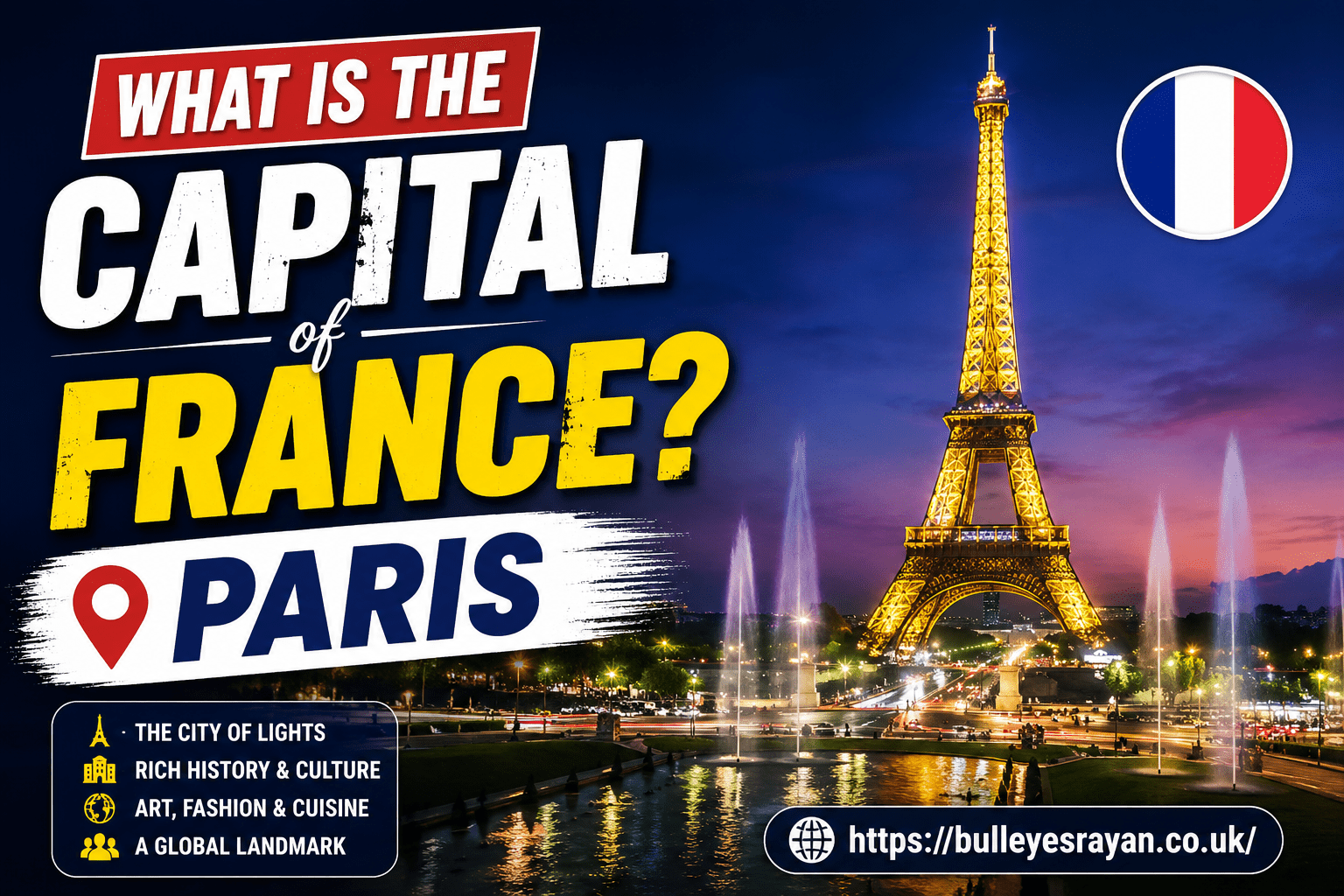
What Is the Capital of France? The Complete Answer You Need
Have you ever wondered what is the capital of France? The answer is Paris. This magnificent city sits on the Seine River in northern France. More than just a political center, Paris represents French art, fashion, and gastronomy to the entire world.
Why Paris Holds the Title of French Capital
Understanding what is the capital of France requires a look at history. King Clovis I made Paris his seat in the 6th century. Later, it grew into the center for French royalty and government. Today, the President works at the Élysée Palace, confirming Paris as the undoubted capital.
The Geographic Heart of France
Paris is not exactly in the middle of France, but it sits at a crossroads. The Seine River provided trade and defense. This prime location allowed Paris to control commerce and politics. So, when someone asks what is the capital of France, geography gives a strong answer: Paris, the natural hub.
How Paris Became the Undisputed Center
Many European capitals grew from small villages. Paris started on the Île de la Cité, a small island. The Parisii, a Gallic tribe, first lived there. Romans later called it Lutetia. Over centuries, it expanded into the powerful French capital we know today.
From Lutetia to Paris: A Royal Transformation
In 508 CE, Clovis I chose Paris as his capital. This decision shaped France forever. Medieval kings built palaces and cathedrals here. The French Revolution later solidified Paris as the people’s political stage. So, what is the capital of France? It is a city forged by kings, revolutions, and citizens.
The Seine River’s Role in Making Paris the Capital
Rivers build great cities, and the Seine built Paris. It provided drinking water, fish, and transport. Merchants floated goods down to the English Channel. The river also created natural borders for defense. Today, the Seine divides Paris into the Right and Left Banks, each with unique energy.
Why No Other City Could Replace Paris
You might ask: why not Lyon or Marseille? Lyon is a food capital, and Marseille is a port giant. But Paris holds all national institutions: the Parliament, the President, the highest courts, and the stock exchange. These facts prove that what is the capital of France has only one answer.
What Makes Paris Instantly Recognizable Worldwide
Paris offers landmarks known on every continent. The Eiffel Tower reaches 330 meters high. The Louvre hosts the Mona Lisa. Notre-Dame Cathedral, even after the fire, remains a Gothic masterpiece. These structures make Paris unforgettable.
A Cultural Powerhouse
Fashion weeks, art exhibitions, and film festivals happen here. Paris sets global trends. When travelers learn what is the capital of France, they also discover a creative engine. The city produces luxury goods, cuisine, and literature that influence billions.
The Government and Political Importance of Paris
All ministers and government officials work in Paris. The National Assembly meets at the Palais Bourbon. The Senate convenes at the Luxembourg Palace. International embassy row lies along the Seine. Paris is where France makes its laws and foreign policies.
The Role of Île-de-France Region
Paris sits inside the Île-de-France region, the country’s economic engine. This region produces nearly 30% of France’s GDP. Major companies have headquarters here. So, what is the capital of France means understanding the entire region that supports it.
Paris as an Economic Giant in Europe
Paris is the wealthiest city in France. It hosts the CAC 40 companies, including LVMH and TotalEnergies. The La Défense business district holds 1,500+ corporate offices. Job seekers and entrepreneurs flock here for opportunity.
Tourism and Global Recognition
Over 30 million tourists visit Paris yearly. They spend billions on hotels, food, and museums. This tourism fuels restaurants, taxi drivers, and shop owners. Knowing what is the capital of France helps travelers plan their dream European vacation.
Education and Innovation in the French Capital
Paris leads in research and higher education. Sorbonne University dates to 1257. Today, top engineering schools like Polytechnique and HEC Paris train future leaders. Students from 150 countries study here, adding to the city’s diversity.
Libraries and Think Tanks
The Bibliothèque nationale de France holds millions of books. Research centers work on AI, medicine, and climate change. Paris remains a city of thinkers. That legacy connects directly to what is the capital of France: a city of knowledge.
Transportation Hubs Connecting Paris to the World
Six international airports serve Paris, with Charles de Gaulle being the largest. High-speed TGV trains reach London, Brussels, and Barcelona in hours. The Métro system, over 300 stations strong, moves millions daily. Paris is Europe’s transportation heart.
Why Connectivity Reinforces Capital Status
A capital must connect its nation. Paris does this perfectly. Highways, rail lines, and flight paths radiate outward. Answering what is the capital of France includes knowing that Paris links France to the globe.
The Living Culture of Paris: Beyond Monuments
Paris is not a museum. It lives and breathes daily life. Local markets sell fresh bread, cheese, and wine. Sidewalk cafés fill with conversation. People dance along the Seine in summer. This vibrant culture attracts new residents every year.
Festivals and Public Celebrations
Bastille Day features a massive military parade. Nuit Blanche turns the city into an all-night art party. The Paris Jazz Festival fills parks with music. These events show why what is the capital of France is more than a fact—it is an experience.
Common Misconceptions About the French Capital
Some believe Versailles was the capital. Versailles was a royal palace, but the government stayed in Paris. Others think Disneyland Paris is the capital’s main attraction. It is not. Paris itself is the main draw. Correcting these myths helps people learn accurately.
Why Children Easily Learn This Fact
Schools worldwide teach what is the capital of France in early grades. Paris appears in cartoons, movies, and books. The Eiffel Tower image is instantly recognizable. This repetition makes Paris one of the most memorable capitals on earth.
How Paris Compares to Other European Capitals
London is larger in area. Berlin is greener. Rome is older. But Paris offers density of culture. You can walk from a medieval chapel to a modern art museum in 15 minutes. This compact brilliance makes Paris unique among capitals.
A Benchmark for Beauty
City planners study Paris’s boulevards and uniform architecture. The city’s beauty is intentional. Haussmann’s 19th-century redesign created open spaces and grand buildings. So, what is the capital of France stands for urban elegance worldwide.
Visiting Paris: What You Must See First
First-time visitors should start at the Eiffel Tower. Then walk along the Seine to Notre-Dame. Cross to the Left Bank for Shakespeare and Company bookstore. End at the Louvre. This route captures the capital’s soul in one day.
Practical Tips for Travelers
Buy a Navigo card for public transport. Learn basic French phrases like “bonjour” and “merci.” Visit museums on free Sundays. Book Eiffel Tower tickets weeks ahead. These tips make your visit smooth. Knowing what is the capital of France is just the first step.
The Future of Paris as France’s Capital
Paris hosts the 2024 Summer Olympics. New metro lines are under construction. The Grand Paris project will connect suburbs faster. The city keeps evolving while holding its historic title. Climate initiatives will make Paris greener by 2030.
A Capital for the Next Century
Paris leads in cycling lanes and pedestrian zones. Electric buses replace diesel models. Urban farms grow food on rooftops. This forward-thinking approach secures Paris’s future. So, what is the capital of France will have the same proud answer for generations.
Frequently Asked Questions (FAQs)
1. What is the capital of France exactly?
Paris is the official and only capital of France. It holds all government institutions, including the President’s office at the Élysée Palace.
2. Was any other city ever the capital of France?
Yes. Versailles briefly served as the seat of power under Louis XIV. Vichy was the capital during WWII’s German occupation. But Paris returned as the permanent capital.
3. Why is Paris the capital and not Lyon?
Paris has a larger population, stronger economy, and deeper historical ties to French royalty. Lyon is a culinary capital, but Paris holds political and financial power.
4. How old is Paris as a capital city?
Paris became the capital in 508 CE under King Clovis I. That makes it over 1,500 years old as a capital.
5. What is the capital of France famous for?
Paris is famous for the Eiffel Tower, Louvre Museum, Notre-Dame Cathedral, French cuisine, high fashion, and romantic river cruises on the Seine.
6. Is Paris the largest city in France?
Yes. Paris is the largest city by population within its administrative limits. The Paris metropolitan area is also the largest in France.
Conclusion: Paris Will Always Be the Answer
You now know exactly what is the capital of France. Paris is not just a dot on a map. It is a living city of history, power, art, and daily joy. Plan a visit. Read a book set in Paris. Or simply share this fact with a friend. Keep the curiosity alive. Want to test your knowledge? Find a map of France and point to Paris. Celebrate that you now hold a key piece of world geography.