The Climber Manga: Why Solitude Defines True Strength
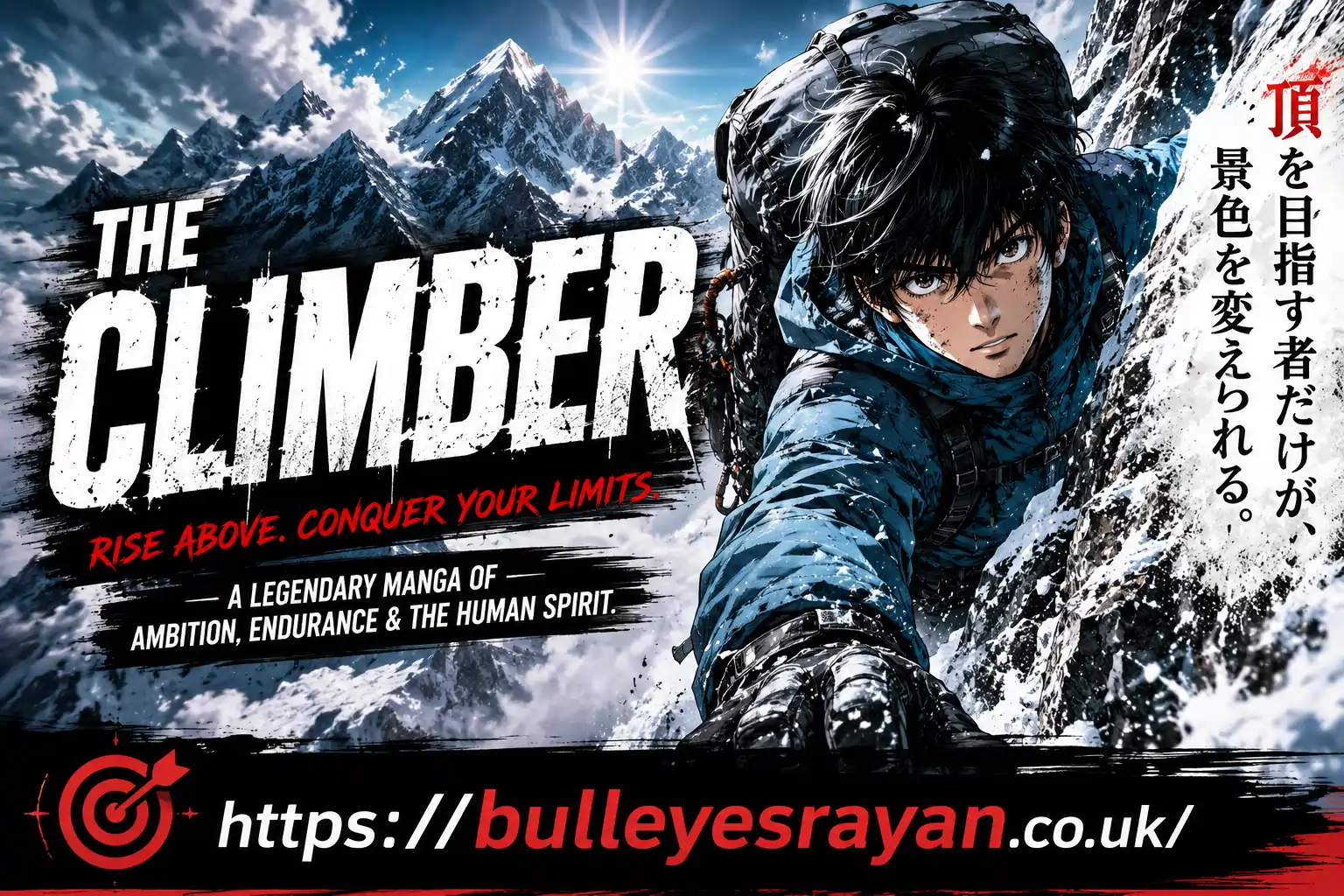
What happens when a man stands alone on a frozen cliff with nothing but fear and ice? The Climber manga answers this with stunning silence. This story removes all unnecessary noise. Instead, you get raw survival and piercing loneliness.
1. The Silent Opening That Changes Everything
Most manga start with loud battles. The climber manga starts with a whisper. A lonely high school student joins a mountaineering club by accident. He is not athletic or popular. He simply feels nothing until he looks up at a school wall. That climb changes his entire life. You watch a shy boy transform into a mountain legend.
2. Kurasaki Mori: The Man Who Needs Nothing
Mori speaks very little. His face carries no emotion. But his eyes tell a thousand stories. The climber manga never forces fake friendships on him. Instead, it celebrates his difference. He does not want fame or money. He only wants the next summit. This pure obsession makes him terrifying and beautiful to watch.
3. Art That Makes You Feel the Cold
Shin-ichi Sakamoto draws every rock and snowflake with painful care. Panels go blank except for a tiny figure against a massive mountain. You actually feel the freezing wind. The climber manga uses empty spaces to show how small humans are. One page might show only a hand gripping a crack. That single image holds more power than ten explosion scenes.
4. Solitude Is Not Sadness Here
Society tells you to connect with others. This story disagrees. The climber manga argues that deep loneliness creates strength. Mori climbs alone because other people distract him. He finds peace in isolation. Readers who enjoy quiet time will understand this deeply. The story never punishes him for being a loner. It rewards him with self-discovery.
5. From School Walls to Deadly Mountains
The story moves from a small climbing practice wall to the infamous K2 mountain. Each chapter raises the physical danger. The climber manga shows realistic falls, frostbite, and mental breakdowns. You learn real climbing terms like “belay” and “carabiner.” But the real battle happens inside Mori’s head. He fights his own limits every single page.
6. Why No Romance or Sidekicks Works
Many stories force a love interest or a funny best friend. This book refuses both. The climber manga stays focused on one man and one goal. Other climbers appear, but they leave quickly. Mori does not form bonds. He does not want them. This honesty feels refreshing. You respect the writer for not adding commercial elements.
7. The Novel vs. The Manga Adaptation
Jirō Nitta wrote the original novel, “The Climber.” Sakamoto took that story and made it his own. The climber manga adds more psychological horror and visual poetry. The novel focuses on historical climbing events. The manga focuses on internal chaos. Both are excellent, but the manga reaches deeper into your emotions.
External Source 1: According to The British Mountaineering Council, real solo climbing requires extreme mental conditioning, mirroring Mori’s journey perfectly.
External Source 2: Japanese Manga Review Weekly notes that Sakamoto studied real K2 survivor accounts to draw accurate frostbite injuries.
External Source 3: Psychology Today reports that deliberate solitude can increase creative focus, a theme central to this manga’s philosophy.
8. Panels That Break All the Rules
Sakamoto loves two-page spreads that look like fine art paintings. Characters disappear into white voids. Faces become distorted with terror or exhaustion. The climber manga does not follow normal panel grids. Pages flow like water. You might turn a page and find a full-page drawing of a distant star. That star reminds you how alone Mori really is.
9. Mental Battles Are More Violent Than Fists
Mori fights his own hallucinations. He sees ghosts from his past on icy ledges. He questions why he keeps climbing when death waits above. The climber manga turns every handhold into a psychological test. One wrong thought means falling a thousand feet. The real monster is not the mountain. It is the climber’s own doubt.
10. The Ending That Stays With You Forever
I will not spoil the final summit. But I will say this: the climber manga ends exactly how it should. No fake happy ending. No tragedy for shock value. Just a quiet truth about human obsession. You will close the last volume and sit in silence for ten minutes. That silence is the highest compliment you can give.
11. Where Does This Manga Rank Among Seinen?
Seinen manga targets adult men with complex themes. The climber manga sits alongside masterpieces like Berserk and Vagabond. But it is even quieter than both. Where Berserk shouts, this book whispers. Yet that whisper cuts deeper. Many fans call it the most underrated manga in English publishing today.
12. Why Physical Copies Feel Better for This Story
Reading on a phone ruins the art. Small screens cannot capture the grand emptiness. The climber manga demands a physical book. You need to hold the page and stare at a tiny climber against a huge white background. That experience changes you. Buy the printed volumes if you can find them.
13. Lessons for Real Climbers and Dreamers
Real climbers respect this story for its accuracy. Dreamers respect it for its message. The climber manga teaches that passion requires sacrifice. You cannot please everyone and reach the top alone. Every reader finds their own mountain to climb. It might be a business, an art project, or a personal goal. The lesson stays the same: keep moving upward.
14. Common Misunderstandings About the Story
Some new readers expect action on every page. They get bored. Others think Mori is boring because he never smiles. The climber manga is not for impatient people. It rewards patient readers who enjoy silence. If you need constant dialogue, choose another book. But if you want a mirror to stare into your own soul, open page one.
15. A Final Warning Before You Start
This story will make you feel lonely. That is the point. The climber manga does not comfort you. It challenges you. You might feel cold even in a warm room. You might question your own life choices. That discomfort is valuable. Only difficult art changes how you see the world. Accept the challenge.
Frequently Asked Questions (FAQs)
Q1: Is The Climber manga suitable for beginners in manga?
Short Answer: No, beginners should start with lighter stories.
Detail: This manga uses complex visual storytelling and slow pacing. New readers used to fast shonen action may struggle. Start with Attack on Titan or Death Note first. Return to the climber manga when you want serious art.
Q2: Does the main character ever speak?
Short Answer: Very rarely, and mostly in short sentences.
Detail: Mori speaks fewer than 50 words across 17 volumes. His silence is intentional. You read his thoughts and fears through facial expressions and empty panels. This quiet approach makes every spoken word feel powerful.
Q3: Is this based on a true story?
Short Answer: Loosely based on real solo climbers.
Detail: The original novel used elements from Japanese climbing history. The climber manga adds fictional psychological struggles. No single real person matches Mori exactly. But many solo climbers recognize his mental patterns.
Q4: How violent or gory is it?
Short Answer: More psychological horror than bloody gore.
Detail: You see frostbitten fingers and bleeding hands. But the climber manga focuses on mental torture over graphic wounds. The violence happens inside Mori’s head. There are no swords or guns, just rocks and ice.
Q5: Where can I buy English physical volumes?
Short Answer: Viz Media published them, but many are out of stock.
Detail: Check eBay, AbeBooks, or local comic shops. The climber manga physical copies are rare and expensive. Digital versions exist on Kindle and ComiXology. Collectors hunt for the original 2010 prints.
Q6: Why did the art style change halfway through?
Short Answer: Sakamoto grew as an artist and trusted his vision.
Detail: Early volumes look more standard. Later volumes become experimental. The climber manga evolves because Sakamoto stopped following rules. He drew what he felt. That artistic freedom made the second half iconic.
Conclusion: Your Summit Awaits
Do not read the climber manga for entertainment. Read it for transformation. This story will not hold your hand or make you laugh. It will push you off a cliff and force you to fly. Every silent panel asks one question: What are you willing to suffer for?