Skink Meaning: Definition, Types & Facts
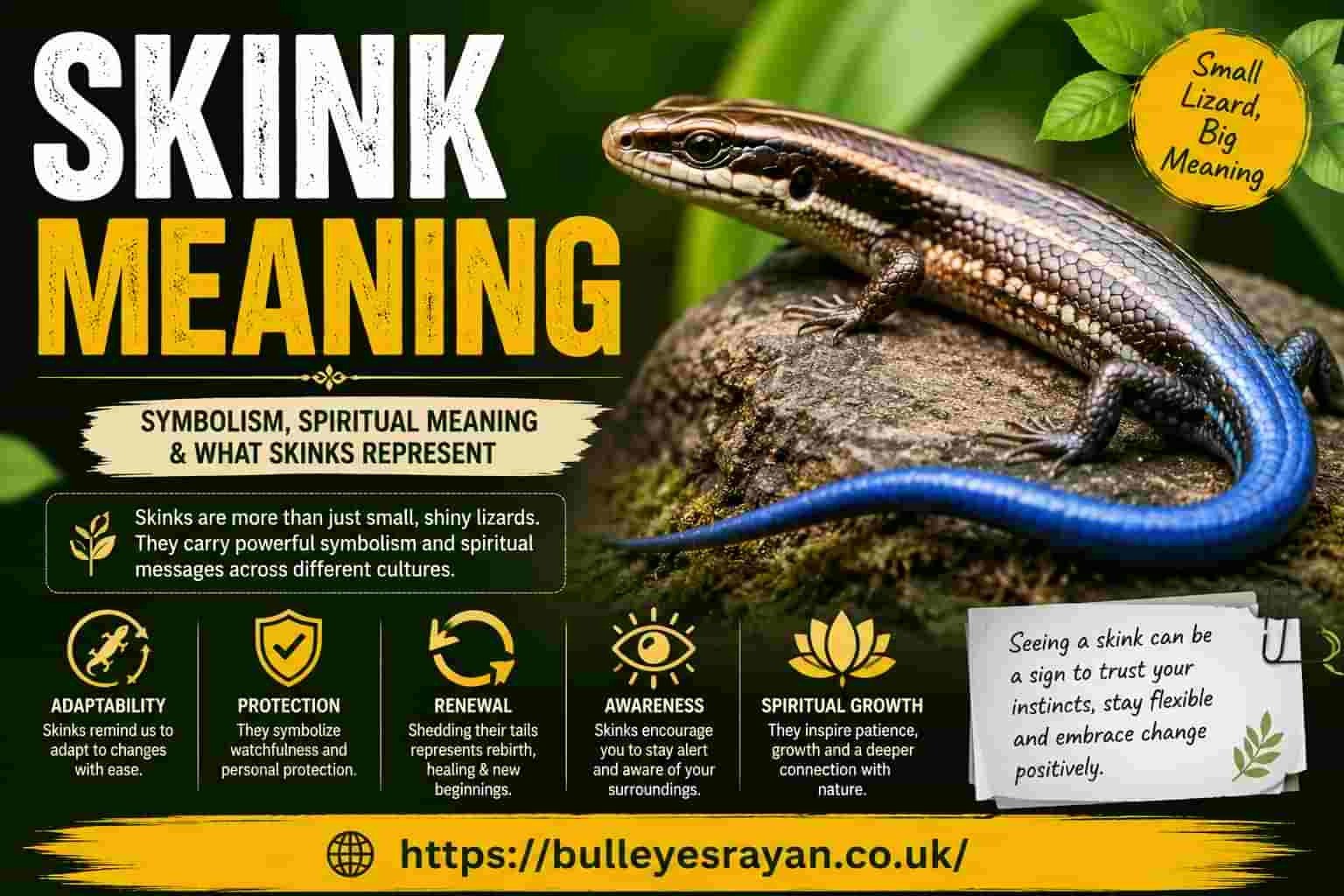
The skink meaning goes far beyond just “a type of lizard.” These reptiles move like snakes but shine like polished jewels. With over 1,500 species worldwide, skinks are the hidden engineers of healthy soil. Understanding the true skink meaning helps gardeners, hikers, and pet lovers see nature’s cleanup crew in a new light.
What Exactly Is a Skink? Breaking Down the Basics
A skink is a lizard belonging to the Scincidae family. Unlike typical lizards with rough, bumpy skin, skinks have smooth, overlapping scales that look wet. This skink meaning often confuses people because their cylindrical bodies and short legs resemble snakes. But look closer. Skinks have visible ear openings and eyelids that blink. These features separate them from any legless reptile.
The skink definition also includes their small, flat bones under the skin. These bones act like a suit of armor. This armor explains why skinks feel hard when touched, not soft like a snake.
Skink Meaning vs. Lizard Meaning: Key Differences
Every skink is a lizard, but not every lizard is a skink. The skink meaning highlights three unique traits.
| Feature | Skink | Typical Lizard |
|---|---|---|
| Scales | Smooth, shiny, overlapping | Rough, bumpy, or keeled |
| Body Shape | Cylindrical, snake-like | Flattened or stocky |
| Legs | Short or missing entirely | Long and prominent |
| Head Shape | Rounded, wedge-shaped | Distinct neck and head |
| Defense Mechanism | Tail drops and wiggles | Biting or puffing up |
This table shows why the true skink meaning matters for identification. If you see a fast, shiny reptile slipping into leaf litter, you likely found a skink.
Where Do Skinks Live? Global Habitats Explained
Skinks thrive on every continent except Antarctica. The skink meaning connects directly to warm, humid places. You find them under rocks, inside rotting logs, and beneath garden mulch. Some species dig deep burrows in deserts. Others climb trees in rainforest canopies. A few even swim through freshwater streams.
In North America, the five-lined skink is common. In Australia, the blue-tongued skink is a backyard favorite. The true skink meaning includes adaptability. These reptiles survive from sea level to mountain peaks over 4,000 feet high.
Why Do Skinks Have Such Shiny Skin?
The shine is not just for beauty. Smooth, overlapping scales reduce friction. This allows skinks to slide through tight cracks and underground tunnels. The skink meaning includes survival through stealth. Dust and dirt cannot stick easily to their glossy skin. Parasites like mites also struggle to attach.
Each scale contains a hard protein called keratin. The same material makes human fingernails. When a skink sheds its skin, it does so in large pieces. This is different from snakes, which shed in one long tube. Watching a skink peel off its old skin shows the living skink meaning in action.
How Skinks Defend Themselves: Tail Autotomy
The most famous skink meaning involves their tail. When a predator grabs a skink by the tail, the tail breaks off. This is called autotomy. The detached tail wriggles violently for up to 15 minutes. The predator focuses on the moving tail while the skink escapes.
The skink grows a new tail within two months. However, the new tail has cartilage instead of bone. It also looks shorter and darker. This ability to sacrifice and regenerate is central to the skink definition. No other common lizard uses this defense as effectively as skinks do.
External Source 1: Journal of Experimental Biology – Studies on tail regeneration rates in Scincidae family.
What Do Skinks Eat? Natural Diet Secrets
Skinks are carnivorous hunters. Their diet includes:
- Crickets and grasshoppers
- Spiders and beetles
- Snails and slugs
- Small earthworms
- Moth caterpillars
Some large skinks also eat baby mice or small frogs. The skink meaning in a garden is “natural pest control.” A single skink can eat 20 insects per day. This protects your vegetables without chemicals. Blue-tongued skinks also eat rotting fruit and flowers, making them omnivores.
External Source 2: University of Michigan Animal Diversity Web – Dietary analysis of common skink species.
Skink Meaning in Different Cultures and Myths
In Hawaiian culture, skinks are called moʻo. These creatures appear in legends as protectors of freshwater ponds. Australian Aboriginal stories describe skinks as fire carriers. The skink meaning there is “keeper of secrets” because they hide under rocks.
In parts of Southeast Asia, seeing a skink inside a house brings good luck. People believe the skink eats poisonous centipedes. In contrast, some Caribbean cultures view skinks as bad omens. These differences show how the skink definition changes based on where you live.
Can You Keep a Skink as a Pet? Honest Advice
Yes, but only specific species. The blue-tongued skink is the best pet skink. The skink meaning as a pet is “low-maintenance but long-lived.” These animals live 15 to 20 years in captivity. They need a heated tank with UVB lighting. Their diet includes canned dog food, greens, and insects.
Never take a wild skink as a pet. Wild skinks carry parasites and stress badly. The true skink meaning for beginners is research first. Blue-tongued skinks cost $200 to $400. Five-lined skinks from the wild die within months. Always buy from a captive-bred breeder.
External Source 3: Reptiles Magazine – Captive care guidelines for blue-tongued skinks.
How to Identify Skinks in Your Backyard
Finding a skink is easy once you know their signs. Look for these clues:
- A flash of shiny brown or blue
- Rustling sound in dry leaves
- Small burrows under paving stones
- Droppings that look like black rice
The skink meaning for homeowners is “welcome guest.” Skinks do not damage buildings. They do not chew wires. They never attack people. If you see a skink inside your garage, leave a small dish of water. It will eat spiders and leave on its own. The complete skink definition includes being completely harmless to humans.
Skink Reproduction: Eggs or Live Birth?
Most skinks lay eggs. A female digs a small nest in damp soil. She lays 4 to 10 soft, leathery eggs. She guards them for three weeks until they hatch. The skink meaning in reproduction changes with climate. Cold-climate skinks keep eggs inside their bodies. They give live birth instead. This keeps the eggs warm without a nest.
Scientists call this ovoviviparity. The young skinks break out of their egg inside the mother. They crawl out as fully formed babies. This adaptation is part of the broader skink definition that makes them so successful worldwide.
What Eats Skinks? Predators and Threats
Skinks have many natural enemies. Snakes are their biggest threat. Other predators include:
- Hawks and crows
- Domestic cats and dogs
- Larger lizards like monitors
- Rats and raccoons
The skink meaning in the food web is “middle-level prey.” Skinks control insects but feed bigger animals. Humans threaten skinks through pesticides. When you spray poison on a beetle, a skink eats that beetle. The poison kills the skink too. Protecting skinks means avoiding chemical sprays in your yard.
Skink Meaning for Conservation: Why They Matter
Skinks are indicator species. This means healthy skink populations signal a healthy environment. The skink meaning for scientists is “early warning system.” If skinks disappear, something is wrong. Pollution, habitat loss, or climate change affects them first.
Currently, 10% of skink species are endangered. The Christmas Island skink went extinct in the wild in 2010. Captive breeding saved it from total loss. Understanding the true skink meaning pushes conservation efforts. Every skink saved means cleaner soil and fewer pests without poisons.
Frequently Asked Questions About Skink Meaning
Q1: What is the simple skink meaning for a child?
A skink is a smooth, shiny lizard that can drop its tail to escape danger. It looks like a snake with short legs.
Q2: Are skinks dangerous to humans?
No skinks are dangerous to humans. Their bite feels like a small pinch. They cannot break skin. They also carry no diseases that affect people.
Q3: How can I tell a skink from a salamander?
Skinks have dry, shiny scales and visible ear holes. Salamanders have wet, smooth skin and no ear holes. Salamanders also live only near water.
Q4: What does skink mean in Australian slang?
In Australia, “skink” only refers to the reptile. No slang meaning exists. However, “skinking” means moving quickly like a skink.
Q5: Do skinks make noise?
Most skinks are silent. Some large species hiss when threatened. Blue-tongued skinks make a huffing sound by pushing air out fast.
Q6: Why do skinks do push-ups?
Male skinks do push-ups to show dominance. This behavior signals territory to other males. It also attracts females during breeding season.
Conclusion: Respect the Shiny Survivor
The true skink meaning goes beyond a dictionary entry. These ancient reptiles have perfected the art of survival. They slide through cracks, sacrifice their tails, and eat thousands of pests. Next time you see a flash of shiny scales in your garden, pause and watch. You are looking at a living example of nature’s smart design. Want to help skinks thrive? Stop using pesticides and leave a pile of rocks in a sunny corner. Your local skinks will thank you with fewer bugs and healthier soil.