Reading About Fashion: The Only Guide You Will Ever Need to Build Real Style
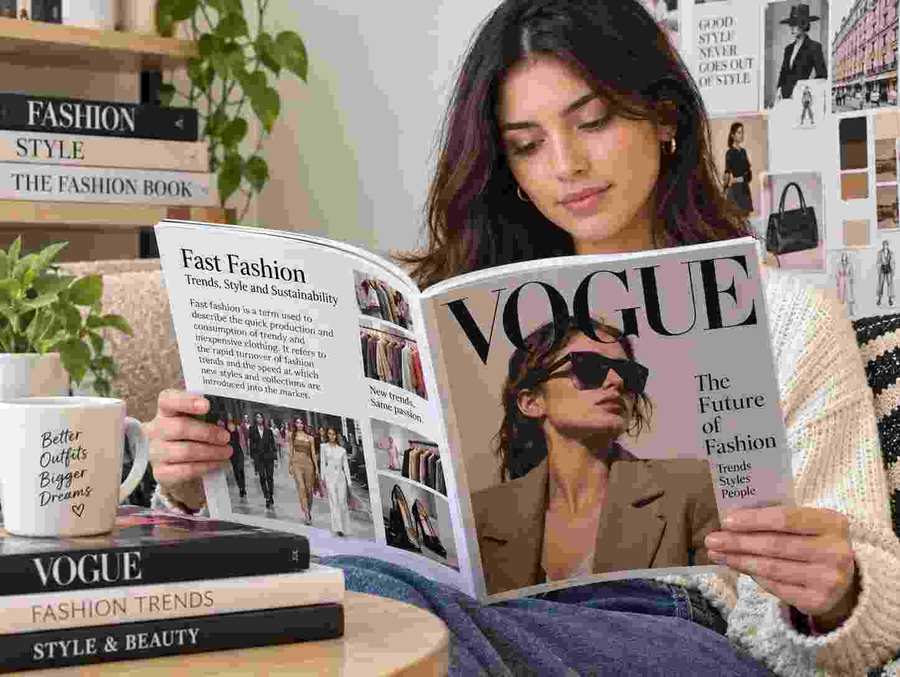
You open your closet every morning and feel completely lost about what to wear. Scrolling through endless outfit posts gives you quick ideas but zero understanding of why certain combinations actually work. Start reading about fashion with real purpose and intention, and you will build a lasting style foundation that outlives every passing trend.
Why Reading About Fashion Changes How You Dress Forever
Most people treat clothing as an afterthought. They grab whatever sits on top of the pile and hope for the best.
When you commit to reading about fashion regularly, something shifts. You begin to notice fabric weight, silhouette balance, and color harmony in ways you never did before.
Style is not about buying expensive labels. It is about understanding the visual language that clothing speaks. That understanding only comes from consistent exposure to well-written fashion content.
The moment you start reading about fashion as a daily habit, your wardrobe decisions become faster, cheaper, and far more confident.
What Should You Read First When Starting Out?
Beginners often feel overwhelmed by the sheer volume of fashion content available online. The trick is to start narrow and expand gradually.
Pick one area that excites you right now. That might be street style photography, vintage clothing history, or minimalist wardrobe building.
Great starting points include:
- Introductory style guides from established publications like Vogue
- Beginner-friendly books on color theory and body proportions
- Weekly newsletters from working stylists and costume designers
- Museum exhibition catalogs covering textile and garment history
Reading about fashion does not require a design degree. You just need curiosity and a willingness to look closely at what people wear and why they wear it.
How Do Fashion Magazines Shape Modern Style?
Fashion magazines have guided public taste for over a century. Harper’s Bazaar launched in 1867, and Vogue followed in 1892. Both publications still set visual standards today.
These magazines do more than showcase pretty clothes. They document cultural shifts, economic moods, and political statements through fabric and form.
When you spend time reading about fashion editorials, you train your eye to spot recurring patterns. A sudden wave of oversized blazers in September tells you something about the collective desire for comfort and authority.
Print and digital magazines remain primary sources for trend forecasting. According to the Business of Fashion, editorial coverage directly influences retail buying decisions across global markets [1].
Which Fashion Books Teach You the Most?
Books offer depth that no Instagram caption can match. A well-researched fashion book gives you historical context, technical vocabulary, and visual references all in one place.
Top recommendations for serious learners:
- The Little Dictionary of Fashion by Christian Dior — timeless advice on proportion and elegance
- Dressed: A Century of Hollywood Costume Design by Deborah Nadoolman Landis — connects cinema to everyday style
- The End of Fashion by Teri Agins — explains the business mechanics behind what reaches store racks
- Women in Clothes by Sheila Heti — a personal, honest exploration of how women relate to garments
Reading about fashion through books slows you down in the best possible way. You absorb ideas rather than just images, and that absorption sticks with you for years.
Can Reading About Fashion Trends Save You Money?
Absolutely. This is one of the most practical benefits nobody talks about.
When you understand the trend cycle, you stop panic-buying items that will look dated within six months. You learn to separate genuine wardrobe investments from hype-driven purchases.
Trend forecasting operates on a roughly 20-year revival loop. Knowing this helps you shop your own closet before rushing to the mall. That vintage corduroy jacket from 2003 might be exactly what the current cycle demands.
Reading about fashion trends with a critical eye turns you into a smarter shopper. You buy less, choose better, and waste far fewer dollars on pieces that collect dust.
What Are the Best Online Platforms for Fashion Reading?
The digital landscape offers more fashion content than any single person could consume in a lifetime. Quality filtering matters more than quantity.
Trusted platforms worth your time:
- Business of Fashion (BoF) — industry analysis and market intelligence [2]
- Vogue Runway — seasonal collection reviews with expert commentary
- The Cut — cultural criticism mixed with accessible style advice
- Man Repeller (archive) — personal essays that explore the emotional side of dressing
- Fashion Institute of Technology (FIT) Digital Collections — academic resources and historical archives [3]
Each platform serves a different purpose. BoF gives you the business angle. Vogue Runway sharpens your visual literacy. FIT grounds your knowledge in academic research.
Mixing these sources gives you a well-rounded perspective that makes reading about fashion both educational and genuinely enjoyable.
How Does Reading About Fashion History Improve Your Wardrobe?
Fashion history is not a dusty academic subject. It is a practical toolkit for modern dressing.
Every trend you see today has roots in a specific decade, movement, or social upheaval. The midi skirt traces back to 1940s fabric rationing. Punk safety pins connect to 1970s London economic frustration.
When you understand these origins, you stop copying outfits blindly. You start making intentional references. That is the difference between looking trendy and looking styled.
Reading about fashion history also protects you from cultural missteps. Knowing the significance of certain garments and patterns helps you dress with respect and awareness.
What Role Do Fashion Blogs Play Today?
Fashion blogs evolved dramatically over the past fifteen years. The early days of outfit-of-the-day posts gave way to long-form essays, investigative pieces, and sustainability reporting.
Independent bloggers often cover niches that major publications ignore. You will find dedicated writers covering plus-size styling, adaptive clothing, modest fashion, and menswear for smaller budgets.
The best blogs feel like conversations with a knowledgeable friend. They share honest reviews, styling failures, and budget breakdowns that glossy magazines rarely publish.
If reading about fashion through blogs appeals to you, follow three to five writers whose body type, budget, and lifestyle mirror your own. Relevance beats popularity every time.
How to Build a Daily Fashion Reading Habit
Consistency beats intensity. Fifteen focused minutes each morning outperforms a three-hour weekend binge.
A simple daily routine:
- Read one editorial or review with your morning coffee
- Save three outfit images that catch your eye and write down why they work
- Read one short article on fabric care, tailoring, or color matching before bed
- Revisit your saved images every Sunday and look for patterns in your preferences
This routine takes almost no extra time. Yet after three months of reading about fashion daily, you will notice a dramatic improvement in how you assemble outfits.
Your eye becomes trained. Your vocabulary expands. Your confidence grows because your choices come from knowledge, not guesswork.
Does Reading About Fashion Help With Sustainable Choices?
The fashion industry produces roughly 10% of global carbon emissions. Making better choices starts with understanding the supply chain.
When you read about garment production, textile sourcing, and labor conditions, your purchasing criteria change. You start asking questions about fabric origin, factory certifications, and brand transparency.
Key sustainability topics to explore:
- Circular fashion and clothing resale markets
- Natural versus synthetic fiber environmental impact
- Greenwashing tactics used by fast fashion brands
- Capsule wardrobe strategies that reduce overall consumption
Reading about fashion through a sustainability lens transforms shopping from a passive activity into an active ethical decision. Every dollar you spend becomes a vote for the kind of industry you want to support.
What Fashion Reading Resources Match Your Experience Level?
Not every resource suits every learner. Matching the material to your current knowledge prevents frustration and keeps you engaged.
| Experience Level | Best Resource Type | Recommended Starting Point | Time Commitment | Key Benefit |
|---|---|---|---|---|
| Complete Beginner | Visual style guides and glossaries | Vogue “Fashion 101” series | 10 min/day | Builds basic vocabulary |
| Casual Learner | Blogs and newsletters | The Cut weekly digest | 15 min/day | Connects trends to real life |
| Intermediate | Books and long-form essays | The End of Fashion by Teri Agins | 30 min/day | Adds business context |
| Advanced | Academic journals and trade reports | BoF Professional membership | 45 min/day | Deepens industry expertise |
| Professional | Primary source archives and runway analysis | FIT Digital Collections | 60 min/day | Supports career decisions |
This table gives you a clear roadmap. Start where you are, not where you think you should be. Reading about fashion at the right difficulty level keeps the process fun rather than exhausting.
Frequently Asked Questions
What is the best way to start reading about fashion?
Pick one specific area that interests you, such as color theory or street style, and read one short article daily. Consistency matters more than volume when you begin.
How often should I spend time reading about fashion?
Fifteen to twenty minutes each day produces the best results. Daily exposure trains your eye faster than occasional deep dives.
Does reading about fashion help me develop personal style?
Yes. Exposure to diverse aesthetics, historical references, and styling techniques gives you a broader visual vocabulary to draw from when building your own look.
Are fashion magazines still worth reading about fashion trends?
Major publications like Vogue and Harper’s Bazaar remain primary trend sources. Their editorial teams attend every major fashion week and analyze collections before trends reach retail stores.
Can reading about fashion replace formal design education?
Reading builds strong foundational knowledge, but it cannot fully replace hands-on pattern making, draping, and textile science training offered by accredited programs.
Where do professionals go for reading about fashion news?
Industry professionals rely on the Business of Fashion, Women’s Wear Daily (WWD), and trade show reports from Première Vision and Pitti Uomo for real-time market intelligence.
Take the First Step Today
Your wardrobe tells a story whether you planned it or not. Reading about fashion gives you the pen to write that story deliberately, confidently, and on your own terms.
Open one article tonight. Save one outfit image tomorrow morning. Ask yourself why a particular combination of textures catches your eye.
Small actions compound. Within weeks, you will walk into any room and understand the visual conversation happening around you. That understanding is power, and it costs you nothing but a few minutes of focused attention each day.
Start now. Your future self will thank you every single time they get dressed.