The Best Old Fashioned Fudge Recipe for Creamy Results
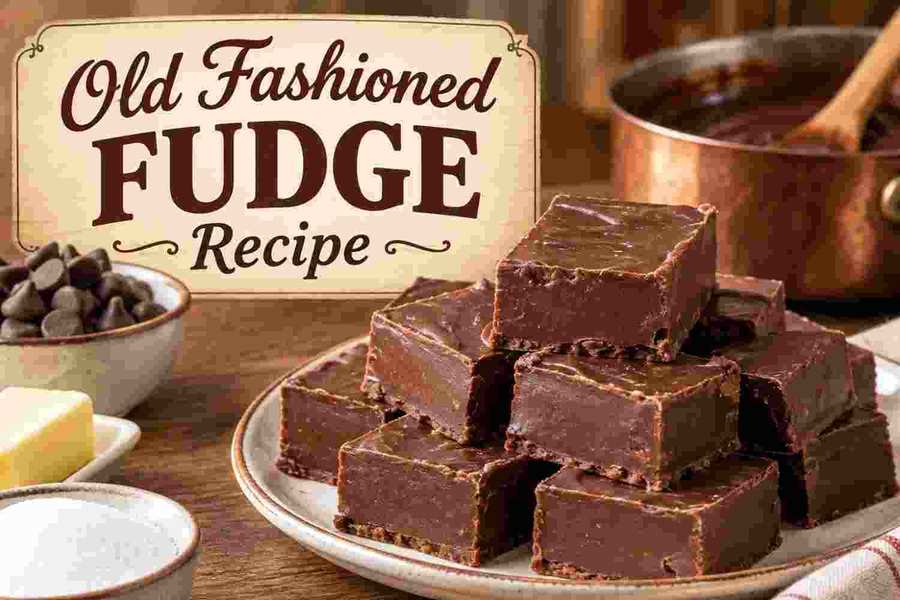
Struggling with grainy, batch-after-batch failures when making homemade candy? Traditional stovetop sweets can burn quickly or turn into rock-hard bricks without exact timing. Skip the frustration and master this foolproof old fashioned fudge recipe that guarantees a silky, melt-in-your-mouth texture every single time.
Prep Time: 15 mins | Cook Time: 20 mins | Cooling Time: 2 hours | Servings: 25 squares
| Ingredient | Quantity | Purpose in Recipe |
| Granulated Sugar | 3 cups | Provides foundational sweetness and structure |
| Unsweetened Cocoa Powder | 3/4 cup | Delivers deep, authentic chocolate entity flavor |
| Whole Milk | 1.5 cups | Dissolves sugar crystals smoothly |
| Salt | 1/4 teaspoon | Balances sweetness and enhances cocoa flavor |
| Unsalted Butter | 1/2 cup (1 stick) | Adds rich fat for a velvety, creamy mouthfeel |
| Pure Vanilla Extract | 1 teaspoon | Elevates overall aromatic profile |
What Is a Traditional Old Fashioned Fudge Recipe?
A true old fashioned fudge recipe relies on simple pantry ingredients like sugar, cocoa powder, milk, and butter cooked to precise temperatures. Unlike modern shortcuts using condensed milk or marshmallow fluff, traditional candy uses controlled sugar crystallization to build its iconic structure.
Why Does Stovetop Fudge Require Precise Temperature Control?
Cooking sugar syrup demands careful heat management to reach the soft-ball stage. A candy thermometer ensures your mixture reaches exactly 234°F (112°C). Skimming past this target evaporates too much liquid, while stopping short leaves your batch liquid.
Essential Kitchen Equipment for Classic Candy Making
Having the right tools ready prevents unexpected mishaps while working with hot sugar syrup.
- Heavy-bottomed saucepan (3-quart size prevents boil-overs)
- Reliable digital or glass candy thermometer
- Wooden spoon or heat-resistant silicone spatula
- 8×8-inch square baking dish lined with parchment paper
- Pastry brush dipped in warm water for wash-downs
Step-by-Step Guide: How to Make Old Fashioned Fudge
- Line an 8×8-inch pan with parchment paper and lightly butter the surface.
- Whisk sugar, cocoa powder, and salt together inside your saucepan to eliminate cocoa lumps.
- Pour in whole milk and stir continuously over medium heat until the sugar dissolves completely.
- Bring the mixture to a rolling boil without stirring to prevent early sugar crystal formation.
- Clip your thermometer to the pan and cook until it registers 234°F.
- Remove immediately from heat, add butter and vanilla on top, but do not stir yet.
- Cool down undisturbed until the pan bottom reaches 110°F (43°C).
- Beat vigorously with a wooden spoon for 5-10 minutes until gloss fades and thickens.
- Pour quickly into your prepared pan, smooth the top, and let set for two hours.
How to Prevent Grainy Chocolate Fudge Every Time
Graininess occurs when large sucrose crystals seed through the liquid batch prematurely. Use a damp pastry brush to wipe stray sugar crystals off the saucepan sides during the initial boil. Avoid stirring the hot liquid while it cooks or cools down to maintain a silky matrix.
What Is the Soft-Ball Stage in Fudge Making?
The soft-ball stage occurs between 234°F and 240°F during sugar boiling. Dropping a tiny spoonful of syrup into cold water creates a pliable, soft ball that flattens when removed. This exact concentration ensures your batch sets firmly while remaining soft to chew.
Key Differences Between Cocoa Powder and Melted Chocolate Fudge
Using cocoa powder gives you maximum control over fat levels and sugar concentration. Unsweetened chocolate bars contain cocoa butter that alters boiling times slightly. Cocoa powder offers a rich, rustic cocoa note characteristic of vintage candy shops.
How to Store Fresh Homemade Fudge for Maximum Freshness
Keep your hand-cut squares wrapped tightly in wax paper inside an airtight container at room temperature. Fresh batches stay moist for up to two weeks on the counter. Avoid refrigeration, as cold air dries out the moisture content faster.
Creative Flavor Variations for Your Classic Recipe
- Pecan Crunch: Fold in 1 cup of toasted chopped pecans during final beating.
- Sea Salt Caramel: Swirl warm caramel sauce across the top before setting.
- Espresso Boost: Mix 1 teaspoon of instant espresso powder into the dry cocoa.
- Peppermint Crunch: Sprinkle crushed candy canes over the setting tray.
Expert Troubleshooting Tips for Candy Failures
If your mixture stays soft, heat it back up with two tablespoons of milk and re-test temperature accuracy. If it hardens too quickly inside the saucepan during beating, add a teaspoon of warm milk and work fast.
Frequently Asked Questions
Why did my old fashioned fudge recipe turn out grainy?
Graininess happens when sugar crystals form prematurely due to stirring during the boiling or cooling phases.
Can I make this old fashioned fudge recipe without a candy thermometer?
Yes, use the cold-water test by dropping syrup into cold water until it forms a soft, pliable ball at 234°F.
How long does homemade fudge take to set completely?
It takes about 2 to 3 hours at room temperature for the sugar matrix to fully set into cuttable squares.
Why is my fudge liquid and not setting?
The syrup did not reach the full 234°F soft-ball stage, leaving too much moisture inside the mixture.
Can I freeze old fashioned fudge for later?
Yes, wrap the slab securely in plastic wrap and foil, then freeze for up to three months.
Should I grease the pan with oil or butter?
Butter is best because it adds authentic taste while preventing the sugar slab from sticking to parchment.