Edgar Cut: The Complete Style, Fade & Maintenance Guide for 2025
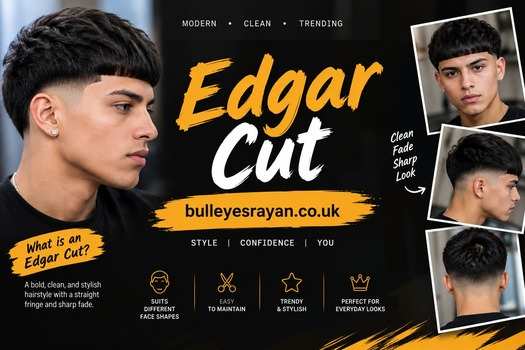
You walk into the barbershop and freeze. You want a fresh look but cannot describe it. The Edgar cut solves that problem instantly. This sharp, textured style gives you a clean fringe with faded sides that turn heads. By the end of this guide, you will know exactly what to ask for, which variation fits your face, and how to maintain it at home.
What Is the Edgar Cut and Why Is It Everywhere Right Now?
The Edgar cut is a men’s haircut built around a blunt, straight-across fringe paired with sharply faded or tapered sides. The top stays textured and slightly longer, creating a bold contrast that frames the forehead.
Think of it as the rebellious younger sibling of the classic Caesar cut. The fringe sits lower and heavier, while the sides disappear into skin or near-skin fades.
Social media platforms like TikTok and Instagram pushed this style into the mainstream around 2021. Barbers across Texas, California, and the Southwest United States report it as their most requested cut for clients aged 15 to 30.
The appeal is simple. It looks intentional, stays low-maintenance, and works with thick, straight, and wavy hair textures.
Where Did the Edgar Cut Come From?
The roots of the Edgar cut trace back to Mexican-American and Chicano barbering culture in the southwestern United States. Young men in cities like El Paso, San Antonio, and Los Angeles started requesting a heavier, more defined version of the traditional crop top fade.
Barbers began calling it the “Edgar” after a common name among their regular clients who brought in reference photos. The name stuck and spread through word of mouth before exploding online.
According to the American Barbershop Association, regional haircut trends now travel nationally within months thanks to short-form video content (americanbarber.org). The Edgar cut followed that exact path.
It evolved from a neighborhood staple into a cultural statement. Wearing one signals awareness of contemporary street style and Latino grooming traditions.
Edgar Cut vs. Caesar Cut: What Makes Them Different?
Many people confuse these two styles. The differences are small but noticeable once you know where to look.
| Feature | Edgar Cut | Caesar Cut |
|---|---|---|
| Fringe Length | 1–2 inches, heavy and blunt | 0.5–1 inch, lighter and softer |
| Fringe Shape | Straight, sharp horizontal line | Slightly textured, natural edge |
| Sides | High or mid skin fade | Low taper or scissor cut |
| Top Texture | Chunky, layered, point-cut | Uniform, even length |
| Overall Vibe | Bold, youthful, street-style | Clean, classic, conservative |
| Best Hair Type | Thick, straight, wavy | All hair types |
| Maintenance | Every 2–3 weeks | Every 3–4 weeks |
The Caesar cut suits office environments and older professionals. The Edgar cut leans younger and louder. Both share the forward-brushed fringe concept, but the Edgar cut amplifies every detail.
Best Edgar Cut Styles for Every Face Shape
Your face shape determines which variation flatters you most. Getting this right separates a great haircut from a forgettable one.
Oval Face
You hit the genetic lottery. Any Edgar cut variation works. Go with a mid-fade and medium fringe length for a balanced, proportional look.
Round Face
Add height on top and keep the sides tight with a high skin fade. The vertical volume elongates your face and sharpens your jawline.
Square Face
Soften the angles with a textured, slightly messy fringe. A low taper fade on the sides keeps the proportions natural without adding extra width.
Heart-Shaped Face
A longer fringe that covers part of the forehead balances a wider upper face. Pair it with a mid-taper fade to avoid making the chin look too narrow.
Diamond Face
Keep some weight on the sides with a shadow fade instead of going to skin. A medium-length textured top fills out the narrow forehead and chin.
How to Ask Your Barber for the Perfect Edgar Cut
Walking in and saying “give me an Edgar” works at some shops but not all. Barbers outside the Southwest may not recognize the name immediately.
Use this exact language for the best results:
- “I want a blunt, straight-across fringe about one to two inches long.”
- “Point-cut the top for heavy texture and movement.”
- “Take the sides down to a skin fade starting at the temple.”
- “Keep the back tight and blend it into the sides.”
- “Leave a sharp line-up around the forehead and temples.”
Show a reference photo on your phone. GQ’s grooming editors recommend bringing at least two images from different angles so your barber understands the full silhouette (gq.com/style/grooming).
Sit in the chair with dry, unwashed hair. Wet hair stretches and hides the true texture, which can throw off the fringe length.
Edgar Cut Fade Variations You Need to Know
The fade you choose changes the entire personality of the haircut. Here are the most popular options barbers offer right now.
High Skin Fade Edgar Cut
The fade starts just below the parietal ridge and drops to bare skin. This creates maximum contrast and the boldest look. Best for thick, dark hair.
Mid Fade Edgar Cut
The transition begins around the middle of the head. It offers a balanced appearance that works in both casual and semi-professional settings.
Low Taper Fade Edgar Cut
Only the hairline and sideburns get faded. The rest of the sides stay fuller. This version grows out the most gracefully and requires fewer barber visits.
Drop Fade Edgar Cut
The fade line curves downward behind the ear, following the natural shape of the skull. It adds a custom, high-end feel to the standard silhouette.
Burst Fade Edgar Cut
The fade radiates outward from the ear in a semicircle. This creates a rounded, mohawk-adjacent shape that stands out in a crowd.
Edgar Cut for Curly, Wavy, and Straight Hair
Hair texture changes how the fringe sits and how the top behaves throughout the day.
Straight Hair
Straight hair gives you the cleanest, sharpest fringe line. The blunt edge stays put with minimal product. Ask your barber to add internal texture so the top does not look like a helmet.
Wavy Hair
Waves add natural movement to the top, which makes the style look effortless. The fringe may curl slightly at the ends, softening the hard line. Use a light sea salt spray to enhance the wave pattern.
Curly Hair
Curly-haired clients can absolutely wear this style. The key is cutting the fringe while the hair is dry so the barber accounts for shrinkage. The top will have a fuller, more voluminous shape that reads as a textured crop rather than a flat fringe.
Allure’s hair trend reports confirm that textured crop variations continue to dominate men’s grooming requests across all hair types (allure.com/hair).
How Long Does It Take to Grow Out an Edgar Cut?
Growing out this haircut takes patience because the fringe and the faded sides grow at different visual rates.
Expect an awkward phase around weeks four through eight. The sides puff out while the fringe creeps past your eyebrows.
Most men reach a workable medium-length style around the three-month mark. During the transition, visit your barber every three weeks to keep the sides trimmed while the top catches up.
Use a light-hold cream to push the fringe to the side during the awkward stage. This disguises the blunt line and makes the grow-out look intentional.
Edgar Cut Maintenance: How Often Should You Visit the Barber?
This haircut demands regular upkeep to stay sharp. The crisp fringe line and tight fade lose definition quickly.
Ideal schedule: Every 2 to 3 weeks.
Stretch schedule: Every 4 weeks if you chose a low taper fade version.
Between visits, maintain the line-up at home with a detail trimmer. Run the trimmer along the forehead edge and temple corners to keep the geometry intact.
Wash your hair two to three times per week with a sulfate-free shampoo. Over-washing strips natural oils and makes the fringe look flat and lifeless.
Best Products to Style Your Edgar Cut at Home
The right product makes the difference between a polished look and a messy one.
- Matte Clay: Adds texture and hold without shine. Perfect for thick hair that needs control throughout the day.
- Sea Salt Spray: Creates a beachy, lived-in texture on wavy and straight hair. Spray on damp hair and scrunch with your fingers.
- Fiber Paste: Delivers medium hold with a natural finish. Work a dime-sized amount through the top and push the fringe forward.
- Light Pomade: Gives a subtle sheen and keeps the fringe line razor-sharp. Best for formal events or photos.
- Volumizing Powder: Sprinkle at the roots for instant lift. Ideal for fine or thin hair that falls flat by midday.
Apply product to towel-dried hair, not soaking wet hair. This gives you better control over the final shape.
Edgar Cut for Kids and Teens: Age-Appropriate Styles
Younger clients request this style more than any other right now. Barbers report that boys as young as 10 walk in with reference photos pulled from social media.
For kids under 13, ask for a softer version. Keep the fringe slightly longer and less blunt. Use a low taper instead of a skin fade to keep the look age-appropriate and school-friendly.
Teens aged 14 to 18 can go bolder. A mid-fade with a textured top and defined line-up gives them the style they want without crossing into overly aggressive territory.
Talk to your child’s barber about face shape and hair texture before committing. A style that looks great on a TikTok creator may not translate to your son’s hair type.
Common Edgar Cut Mistakes and How to Avoid Them
Even experienced barbers can miss the mark if communication breaks down. Watch out for these frequent errors.
Fringe Too Short
Once the fringe goes above the mid-forehead, you lose the defining feature of the style. Always ask for at least one inch of length at the front.
Sides Too Puffy
If the barber does not take the sides tight enough, the head looks round and wide. Insist on a fade that reaches skin or near-skin at the bottom.
No Texture on Top
A solid, untextured block of hair on top looks like a bowl cut. Point-cutting or razor-cutting the top layers prevents this problem.
Ignoring the Hairline
A messy hairline ruins the clean geometry. Make sure your barber finishes with a straight razor line-up around the forehead and temples.
Using Heavy Gel
Thick, crunchy gel makes the fringe look stiff and outdated. Switch to matte products that hold shape without freezing the hair in place.
Ready to Get Your Edgar Cut?
The Edgar cut gives you a sharp, modern look that works across hair types, face shapes, and age groups. You now know the exact language to use with your barber, the fade variations that match your personality, and the products that keep the style fresh between visits.
Stop scrolling through reference photos and start wearing the haircut. Book your next appointment, bring two clear images, and tell your barber exactly what you want. The only thing standing between you and the cleanest fringe in the room is a twenty-minute chair session.
Go get it done.