What is Direct Earnings Attachment Meaning? Everything You Need to Know
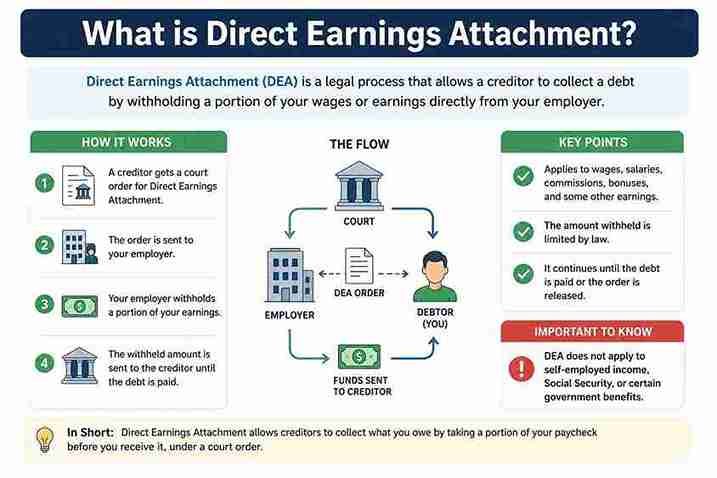
Struggling to understand how wage deductions work when you owe money can feel overwhelming. You worry about your paycheck shrinking and wonder how you will cover basic living expenses. Direct earnings attachment meaning clears up this confusion by showing exactly how government bodies or creditors collect unpaid debts straight from your salary before it hits your bank account.
Understanding Direct Earnings Attachment
A direct earnings attachment (DEA) is a statutory method used to recover unpaid debts directly from an individual’s salary or wages. When someone falls behind on specific financial obligations, the relevant authority can issue an order requiring the employer to deduct a specific percentage from the employee’s pay.
Understanding direct earnings attachment meaning helps workers anticipate payroll adjustments and plan their household budgets accurately. Employers must comply with these legal notices to avoid penalties, ensuring the debt recovery process moves forward efficiently.
- Direct deduction from gross or net salary.
- Automatic processing through company payroll departments.
- Legally mandated compliance for employers.
- Standardized rates based on earnings tiers.
How Direct Earnings Attachment Works
The mechanism behind a DEA relies on clear communication between the creditor, the employer, and the employee. Once a debt remains unpaid after multiple warnings, the creditor calculates the deduction amount based on the debtor’s earnings bracket.
The employer receives an official notice detailing the exact percentage to withhold each pay period. This amount is then transferred directly to the creditor until the balance is fully cleared.
- Creditor issues formal notification to the employer.
- Employer calculates the deduction using official tables.
- Funds are remitted to the creditor monthly.
- Employee receives a payslip showing the adjusted net pay.
Debts Collected Through a DEA
Not all personal debts qualify for this specific recovery method. Direct earnings attachment meaning typically applies to public sector obligations and state-related arrears rather than private commercial credit cards.
Knowing which debts trigger a DEA allows individuals to prioritize their payments and seek appropriate financial advice before enforcement begins.
- Overpaid state benefits and welfare funds.
- Unpaid council tax or local government arrears.
- Court fines and related legal penalties.
- Child maintenance payments in specific jurisdictions.
Legal Framework and Regulations
Official legislation governs every aspect of how a DEA is administered. These rules protect vulnerable workers by setting strict limits on how much money can be taken from a paycheck.
The legal framework ensures that employers calculate deductions fairly while giving employees clear channels to appeal errors or report severe financial hardship.
Expert Note: Legislation mandates that protected earnings must remain untouched so employees can always afford basic living necessities like food and housing.
- Statutory authority granted by government acts.
- Clear calculation formulas to prevent excessive deductions.
- Mandatory notice periods before deductions start.
- Built-in safeguards for low-income earners.
Employer Responsibilities and Duties
Employers play a critical role in executing a DEA. Once a business receives a valid deduction order, management and payroll teams must act promptly.
Failing to process the order or mishandling the funds can result in legal liabilities for the company. Therefore, HR departments must understand direct earnings attachment meaning to maintain compliance.
- Verify the authenticity of the attachment order.
- Implement deductions starting from the next scheduled payday.
- Transfer withheld funds to the authority on time.
- Maintain strict confidentiality regarding employee financial matters.
Employee Rights and Protections
Even when a debt recovery order is active, workers retain specific legal rights. Direct earnings attachment meaning encompasses these vital protections designed to prevent financial destitution.
Employees can challenge incorrect calculations, request a review if the deductions cause extreme hardship, or contact advisory services for support.
- Right to receive a clear breakdown on payslips.
- Right to request a reassessment based on changing income.
- Protection of a minimum baseline income.
- Access to independent debt counseling services.
Impact on Credit Score and Finances
Having a wage deduction order active can influence an individual’s financial stability. While a DEA itself may not appear on a credit report in the same way a county court judgment does, the underlying debt certainly does.
Managing monthly cash flow becomes essential when a portion of the salary goes straight to debt repayment.
- Reduced disposable income for monthly budgeting.
- Necessity to cut discretionary spending habits.
- Improved long-term standing once the debt is cleared.
- Opportunity to restructure overall personal finances.
Comparison With Other Debt Recovery Methods
Creditors use various tactics to collect overdue money. Comparing a DEA with alternatives like attachment of earnings orders or voluntary payment plans highlights why specific routes are chosen.
Understanding direct earnings attachment meaning alongside other legal terms helps clarify the entire debt landscape.
| Recovery Method | Primary Target | Involvement Required |
| Direct Earnings Attachment | Government and state debts | Employer and creditor |
| Attachment of Earnings | Court-ordered civil debts | Court system and employer |
| Voluntary Payment Plan | General unsecured debts | Direct debtor cooperation |
Common Misconceptions About DEAs
Many myths surround wage deductions, often causing unnecessary panic. Clarifying direct earnings attachment meaning dispels false rumors about total salary confiscation or immediate job termination.
Knowing the facts empowers individuals to address their financial challenges head-on rather than ignoring warning letters.
- Myth: Employers can fire workers for receiving a DEA.
- Fact: Labor laws protect employees from discrimination based on debt recovery orders.
- Myth: Creditors can take 100% of your paycheck.
- Fact: Strict sliding scales limit deductions to protect your livelihood.
Steps to Take If You Receive a DEA Notice
Receiving notice of an impending wage deduction requires swift, calm action. Ignoring the paperwork will only lead to further complications and potential additional fees.
Taking proactive steps allows you to verify the debt amount and explore potential solutions with the issuing authority.
- Review the notice carefully for accuracy regarding your identity and debt amount.
- Contact the issuing authority immediately if you spot any calculation errors.
- Inform your employer’s payroll department to ensure smooth processing.
- Budget your upcoming months around the adjusted net income.
Frequently Asked Questions
What is the primary direct earnings attachment meaning?
It is a legal mechanism that allows authorities to collect unpaid public debts directly from a worker’s salary through their employer.
Can my employer refuse to process a DEA?
No, employers are legally obligated to comply with valid deduction orders once received from the relevant government body or creditor.
How much of my salary can be deducted?
Deductions are calculated using a sliding scale based on your net earnings, ensuring a protected percentage always remains for your living costs.
Does a DEA ruin my employment record?
No, payroll departments handle these matters confidentially, and having a DEA does not legally affect your job security or professional standing.
What debts trigger this type of deduction?
Common triggers include unpaid council tax, overpaid government benefits, court fines, and specific state-administered financial obligations.
Can I stop a DEA once it starts?
You can stop it by paying the total outstanding debt in full or by successfully negotiating an alternative repayment arrangement with the creditor.
Conclusion
Mastering direct earnings attachment meaning gives you the clarity needed to navigate difficult financial situations with confidence. By understanding how wage deductions work, recognizing your rights, and communicating with your employer, you can manage debt recovery effectively. Take control of your financial future today by reviewing your budget, verifying your obligations, and seeking professional guidance if debt challenges arise.