1960’s Fashion Menswear: The Definitive Guide to the Decade That Changed Men’s Style
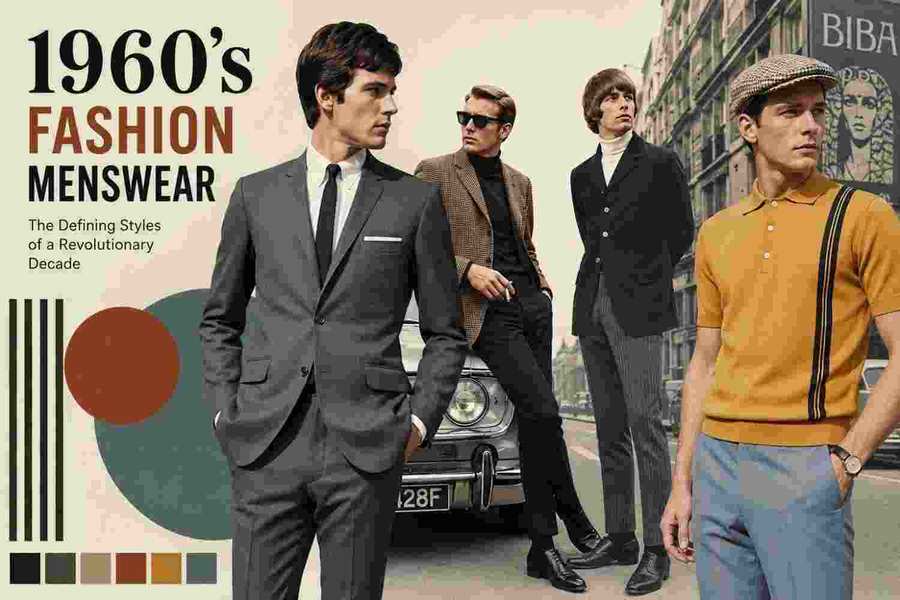
Most men struggle to pinpoint exactly what made 1960’s fashion menswear so revolutionary. Without understanding the era’s sharp silhouettes, bold fabrics, and cultural shifts, your vintage-inspired wardrobe will always fall flat. This complete guide breaks down every key trend, style icon, and tailoring detail from the decade so you can dress with authentic mid-century confidence.
What Made 1960’s Fashion Menswear So Different From Previous Decades?
The 1950s kept men locked in boxy, conservative suits with wide shoulders and baggy trousers. Then the 1960s arrived and shattered every established rule.
Young men across London and New York demanded clothing that matched their restless energy. Tailors responded with narrower lapels, slimmer cuts, and bolder color choices that turned heads on every street corner.
1960’s fashion menswear moved away from the stiff formality of the post-war era entirely. Instead, it embraced individuality, youth culture, and a fearless willingness to experiment with silhouette, texture, and proportion.
How Did the Mod Movement Shape 1960’s Fashion Menswear?
The Mod subculture started on the rain-soaked streets of London and quickly became the single most powerful force behind 1960’s fashion menswear. Young men gathered around Carnaby Street boutiques, hunting for the sharpest Italian-cut suits they could afford.
Mod style favored slim-fitting three-button jackets with narrow lapels and high armholes. Trousers sat high on the natural waist and tapered sharply toward the ankle, creating a clean vertical line from shoulder to shoe.
Color played a massive role in the Mod wardrobe. Devotees wore tonal outfits in charcoal, navy, and dove grey, then added a precise pop of color through a skinny tie, a silk pocket square, or a pair of bold socks.
The Victoria and Albert Museum documents that the Mod movement fundamentally shifted British tailoring from traditional Savile Row conservatism toward youthful, continental-inspired silhouettes that redefined how young men dressed across Europe (vam.ac.uk).
Which Fabrics Defined 1960’s Fashion Menswear?
Fabric choice separated the stylish from the outdated during this transformative decade.
- Mohair blends: Mods adored mohair-wool suits for their subtle sheen and crisp, structured drape under stage lights.
- Terylene (polyester): Affordable and wrinkle-resistant, this synthetic fabric flooded the mass market by mid-decade and brought sharp tailoring to working-class budgets.
- Corduroy: Casual jackets and trousers in wide-wale corduroy became a staple of the American Ivy League look.
- Seersucker: Lightweight and breathable, this puckered cotton kept men cool and stylish during humid summer months.
- Crushed velvet: By the late 1960s, velvet dinner jackets appeared at rock concerts, gallery openings, and underground parties alike.
The Metropolitan Museum of Art’s Costume Institute highlights that synthetic fabric innovation during the 1960s democratized fashion, allowing everyday men to access styles previously reserved for the wealthy elite (metmuseum.org).
What Role Did the Ivy League Look Play in 1960’s Fashion Menswear?
While London Mods grabbed newspaper headlines, American university campuses quietly shaped their own influential version of 1960’s fashion menswear.
The Ivy League look centered on natural-shoulder sack suits, button-down Oxford cloth shirts, and polished penny loafers. This style projected quiet confidence without shouting for attention or chasing trends.
Key Ivy pieces included:
- Navy blazers with brass buttons and patch pockets
- Khaki chinos with a straight, clean leg
- Shetland wool crew-neck sweaters in oatmeal and burgundy
- Repp stripe ties in muted, collegiate tones
- White bucks and Weejun loafers for weekend wear
Ivy style proved that understated dressing could carry just as much cultural weight as the flashier Mod aesthetic across the Atlantic.
How Did Music Icons Influence 1960’s Fashion Menswear?
Musicians became the most powerful style influencers the world had ever seen.
The Beatles popularized collarless Pierre Cardin suits and sleek Beatle boots during their early touring years. By 1967, they had shifted to psychedelic military jackets, round sunglasses, and flowing scarves, pushing 1960’s fashion menswear into completely uncharted territory.
Jimi Hendrix brought flamboyant crushed velvet, ruffled poet shirts, and wide-brimmed felt hats to the mainstream stage. Mick Jagger mixed razor-slim tailoring with androgynous touches that challenged traditional ideas about masculinity in clothing.
These performers did not simply wear clothes. They broadcasted identity, rebellion, and aspiration, and millions of young men followed their lead without hesitation.
What Were the Most Popular Suit Styles in 1960’s Fashion Menswear?
Suits remained the backbone of men’s wardrobes throughout the decade, but their construction changed dramatically from year to year.
| Feature | Early 1960s (1960–1963) | Mid 1960s (1964–1966) | Late 1960s (1967–1969) |
|---|---|---|---|
| Jacket Cut | Slim, single-breasted, 3-button | Ultra-slim Mod cut, 2-button | Relaxed, wider lapels returning |
| Lapel Width | Narrow (2–2.5 inches) | Very narrow (1.5–2 inches) | Widening (3+ inches) |
| Trouser Fit | Tapered, high-rise | Skinny, ankle-grazing | Flared or straight-leg |
| Dominant Colors | Charcoal, navy, steel grey | Bold solids, tonal pairings | Psychedelic prints, earth tones |
| Primary Fabrics | Worsted wool, mohair | Mohair, Terylene blends | Velvet, corduroy, denim |
| Shirt Collar | Spread or classic point | Narrow tab collar | Wide spearpoint |
| Tie Width | Skinny (2 inches) | Skinny to medium | Wide kipper ties (4–5 inches) |
| Footwear | Chelsea boots, Oxfords | Beatle boots, loafers | Cuban-heel boots, sandals |
This table shows how rapidly 1960’s fashion menswear evolved within a single ten-year span, moving from conservative tailoring to expressive freedom.
How Did Casual Wear Evolve During the 1960s?
Casual clothing gained serious ground and permanent respectability during this period.
Turtleneck sweaters replaced stiff dress shirts under blazers for evening events and gallery openings. Denim jeans transitioned from blue-collar workwear to everyday fashion, especially among college students and young creatives.
Polo shirts, rugby stripes, and lightweight Harrington jackets became weekend staples for men of all backgrounds. The rigid line between formal and informal dressing blurred in ways that still influence menswear decisions today.
What Accessories Completed the 1960’s Fashion Menswear Look?
Accessories carried enormous weight in this decade and often defined an entire outfit.
- Skinny ties: Worn with narrow-lapel suits to create a clean, uninterrupted vertical line.
- Chelsea boots: Elastic-sided ankle boots became the unmistakable signature of Mod footwear.
- Round sunglasses: John Lennon made small, circular wire-frame lenses a global phenomenon.
- Pocket squares: Folded neatly or puffed casually, they injected personality into any jacket.
- Cufflinks: Simple silver or enamel designs kept the overall look refined and intentional.
- Dress watches: Slim cases with leather straps replaced the bulky timepieces of the previous decade.
How Did Color Palettes Shift Throughout the Decade?
Early 1960s menswear stuck to safe, muted tones that would not offend a conservative office. Navy, charcoal, and olive dominated boardrooms and evening events.
By 1965, Carnaby Street shop windows displayed electric blues, mustard yellows, and burnt oranges that stopped pedestrians in their tracks. The peacock revolution actively encouraged men to wear vivid colors previously considered feminine or inappropriate.
The late 1960s introduced earthy, natural tones pulled from the counterculture movement. Warm browns, deep rusts, and forest greens replaced the bright synthetic pops of mid-decade and signaled a return to organic simplicity.
What Can Modern Men Learn From 1960’s Fashion Menswear Today?
The core principles behind 1960’s fashion menswear remain strikingly relevant for any man building a wardrobe right now.
Fit matters far more than brand name or price tag. The Mods proved conclusively that a perfectly tailored affordable suit outshines an ill-fitting expensive one every single time you walk into a room.
Color confidence transforms an ordinary outfit into a memorable one. Adding a single bold element — a colored sock, a patterned pocket square, or a textured knit tie — elevates a basic look instantly and effortlessly.
Dress for your actual lifestyle, not someone else’s outdated expectations. The 1960s taught an entire generation of men that clothing should reflect personal identity and genuine self-expression, not just social obligation.
How Did Counterculture Movements Reshape Late 1960s Menswear?
The hippie movement rejected mainstream tailoring entirely and rewrote the rules from scratch.
Long flowing hair, hand-dyed tie-dye shirts, bell-bottom jeans, and fringed suede vests replaced the clean geometric lines of early-decade Mod style. Military surplus jackets became visible anti-war statements worn proudly at protests and music festivals.
The Fashion Institute of Technology documents how this counterculture shift forced the entire fashion industry to acknowledge youth-driven, anti-establishment aesthetics as commercially viable and culturally significant (fitnyc.edu).
This late-decade rebellion laid the direct groundwork for 1970s fashion and permanently expanded what men felt comfortable wearing in public.
Frequently Asked Questions About 1960’s Fashion Menswear
Q: What is the most iconic 1960’s fashion menswear trend?
The slim-cut Mod suit with narrow lapels and sharply tapered trousers stands as the most recognizable trend of the entire decade. It defined the early-to-mid 1960s silhouette and influenced tailoring standards worldwide.
Q: Who were the biggest style icons of 1960’s fashion menswear?
The Beatles, Steve McQueen, Sean Connery as James Bond, and Jimi Hendrix each shaped distinct facets of the decade’s menswear landscape, from sharp tailoring to rebellious rock-and-roll flair.
Q: How do I dress in 1960’s fashion menswear today?
Start with a slim-fit navy or charcoal suit featuring narrow lapels, pair it with tapered trousers, Chelsea boots, and a skinny tie. Keep your color palette tonal and your accessories minimal for an authentic mid-century look.
Q: What shoes were popular in 1960’s fashion menswear?
Chelsea boots, Beatle boots with Cuban heels, polished penny loafers, and suede desert boots dominated the decade’s footwear scene across both the UK and the US.
Q: Did 1960’s fashion menswear differ between the US and UK?
Yes. The UK favored sharp Mod tailoring and Carnaby Street boldness, while the US leaned toward relaxed Ivy League prep, natural-shoulder suits, and West Coast casual wear.
Q: What hairstyles matched 1960’s fashion menswear?
Early-decade styles included the neat side-part and the geometric Mod bowl cut. By the late 1960s, longer layered hair became the norm alongside the emerging counterculture and rock-and-roll look.
Start Dressing Like the Decade That Changed Everything
The 1960s gave men permission to dress with intention, creativity, and unapologetic confidence. From the razor-sharp Mod suits of Carnaby Street to the relaxed Ivy League blazers of American campuses, this decade proved that menswear could be both deeply personal and undeniably powerful.
Pick one element from this era — a slimmer silhouette, a bolder color, a richer textured fabric — and work it into your wardrobe this week. Great style starts with a single deliberate choice. Make yours count.